
By Earl Burnett | KSRNAZ.com
PHOENIX — There is an old saying in basketball: You can never have too many scorers.
Somewhere in Phoenix, however, the Suns might be discovering the fine print: You can have too many scorers and not enough people getting them the ball.
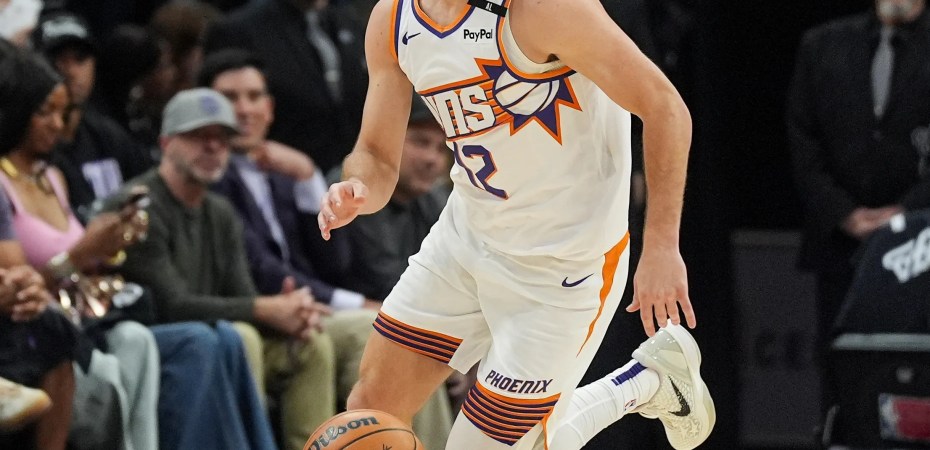
Welcome to the Suns’ early-season dilemma, where the baskets are still 10 feet high, the shot clock is still ticking, and the search for somebody to organize the offense may be becoming the most important personnel question in the Valley.
According to NBA insider Chris Haynes, reported October 29, there is growing frustration within the Suns’ locker room over the team’s lack of a traditional point guard capable of organizing the offense. That doesn’t necessarily mean a trade is imminent, but it does suggest Phoenix has a question worth answering before the season gets too far down the road.
And if the Suns decide the answer isn’t already on their roster, general manager Brian Gregory could find himself shopping for a floor general.
No pressure, Brian. Just help keep the season from turning into a game of pickup basketball with expensive sneakers.
Booker Is a Superstar, Not a One-Man Postal Service
Devin Booker has spent years proving he can score with the best players in the NBA. He can shoot from the perimeter, attack the basket, create his own shot and take over games when the moment demands it.
He can also distribute the basketball.
But asking Booker to shoulder the scoring burden while serving as the team’s primary organizer is a little like asking a five-star chef to cook dinner, seat the customers, wash the dishes and manage the restaurant’s parking lot.
Sure, he might pull it off. But why make the job harder than it needs to be?
Booker is at his best when he can attack defenses, find his scoring rhythm and punish opponents who send extra defenders his way. A dependable point guard could help create those opportunities rather than forcing Booker to manufacture nearly everything himself.
The Suns have also paired Booker with Jalen Green, another guard whose biggest strengths revolve around scoring and attacking the defense. That’s an exciting combination when both players are rolling. But when the offense gets stuck, Phoenix needs someone who can slow things down, read the floor and make the right pass.
Sometimes the best play isn’t a 25-foot jumper.
Sometimes it’s getting the ball to the big man for an easy basket.
Revolutionary stuff, we know.
Five Point Guards Who Could Enter the Conversation
Let’s be clear: These are potential targets to consider, not a list of confirmed Suns negotiations. Whether any of these players becomes available will depend on team circumstances, contracts, injuries and the price of doing business.
Still, if Phoenix decides it needs a point guard, there are several intriguing names to examine.
1. Dejounte Murray — The Two-Way Solution
If the Suns want a guard who can organize an offense without forgetting that basketball has two ends of the court, Dejounte Murray deserves a serious look.
Murray has experience running a team, creating shots for teammates and defending opposing guards. He offers a different skill set from Booker and Green, which is precisely what Phoenix could use.
His ability to initiate offense would give Booker more opportunities to operate without constantly being responsible for starting every possession. Murray’s defensive instincts could also help address a team that has struggled to establish itself defensively early in the season.
There are questions, of course. Murray has dealt with significant injuries, and Phoenix would need to evaluate his health, availability and contract situation carefully.
But if the Suns want a guard who brings both playmaking and defense, Murray checks some important boxes.
Fit in Phoenix: Potentially strong, provided the medical and financial details make sense.
2. Kyrie Irving — The Star Power Option
Kyrie Irving is not your traditional pass-first point guard, but he can run an offense, handle pressure and create shots against almost anybody.
His ball-handling and scoring ability would give Phoenix another player capable of breaking down a defense when the half-court offense gets stuck.
Imagine defenses trying to contain Booker while also worrying about Irving attacking off the dribble. That’s the sort of problem opposing coaches don’t enjoy solving.
However, this would be a complicated scenario. Irving’s recovery from a major knee injury, his availability and the financial requirements of a potential deal would all need careful consideration.
The Suns also must ask themselves whether adding another high-profile scorer actually addresses the underlying problem.
Fit in Phoenix: Electrifying offensively, but the cost and health considerations could make this a difficult deal to pull off.
3. Dennis Schröder — The Pace Setter
Not every solution needs to arrive with a superstar price tag.
Dennis Schröder is an experienced guard who can push the pace, pressure defenses and keep the ball moving. He brings energy and a willingness to attack rather than allowing an offense to settle into a predictable rhythm.
For Phoenix, that could be valuable.
A guard who gets the team into its sets quickly, attacks openings and creates opportunities for teammates could make life easier for Booker and the rest of the roster.
Schröder wouldn’t necessarily solve every problem, and his availability would depend on Charlotte’s plans. But if the Suns prefer a more modest move rather than a blockbuster, he could be worth investigating.
Fit in Phoenix: An intriguing option if the Suns prioritize experience and playmaking without sacrificing too much of their future.
4. De’Aaron Fox — The High-Speed Answer
If the Suns want to change the tempo of their offense, De’Aaron Fox would certainly get their attention.
Fox combines speed, scoring ability and playmaking. He can attack the paint before defenses get organized, create opportunities for teammates and force opponents to defend the entire floor.
That kind of pressure could open up more space for Booker to work.
The complication is obvious: Fox is an important player for the San Antonio Spurs, and there is no guarantee they would consider moving him. Phoenix would also have to put together a compelling offer without weakening the roster in other areas.
This is the kind of name that sounds wonderful in a sports radio segment. Turning the idea into an actual transaction is another matter entirely.
Fit in Phoenix: Excellent basketball fit, but likely a difficult acquisition unless circumstances change.
5. Scoot Henderson — The Younger Option
If Phoenix wants to think beyond the immediate season, Scoot Henderson offers a different possibility.
The young guard has the athleticism and attacking instincts to pressure defenses, and additional development could help him become a more consistent organizer.
A move for Henderson would represent a bet on potential rather than a guaranteed quick fix. The Suns would need to decide whether he could contribute soon enough to help their current group.
Portland’s willingness to move him would also be a major factor.
Phoenix cannot afford to confuse a promising prospect with a finished product. If Henderson became available at the right price, though, the idea would be worth exploring.
Fit in Phoenix: An intriguing longer-term possibility, provided the Suns have the patience and assets to pursue it.
Don’t Forget the In-House Option
Before Phoenix starts throwing trade proposals around like business cards at a convention, it should take a hard look at its existing roster.
Collin Gillespie is the most obvious internal candidate to handle more traditional point guard responsibilities. He has already demonstrated that he can start games and help organize the offense.
Giving Gillespie a larger role could offer a relatively inexpensive way to test whether the current group can function more smoothly.
That doesn’t mean he is guaranteed to be the answer. There’s a difference between being capable of running an offense and being the point guard who can consistently direct a team with serious postseason ambitions.
But the Suns should find out what they have before deciding what they need to buy.
If Gillespie can steady the offense, Phoenix might be able to spend its limited trade resources elsewhere. If the problems persist, the front office will have a clearer picture of what type of guard it needs.
Either way, an evaluation period makes sense.
Would Phoenix Trade Jalen Green?
Now we’re getting into the conversation that could make Suns fans put down their coffee and start arguing.
Jalen Green has been mentioned in outside speculation about possible ways Phoenix could acquire a more traditional point guard. The logic is straightforward: Green is a talented scorer, but the fit alongside Booker raises questions about who will consistently organize the offense.
A deal involving Green could potentially bring back a guard with a more natural playmaking profile.
But that doesn’t automatically make it the right move.
Green has the athleticism and scoring ability to change a game in a hurry. Trading him too early could mean giving up on a player who needs more time to find his place alongside Booker.
The Suns would also need to find a return that genuinely improves the team rather than simply exchanging one set of questions for another.
If Phoenix considers moving Green, the target should be a player who fills a clearly defined need, not somebody whose name happens to generate excitement on social media.
A trade should make the basketball fit better, not merely make the transaction headline bigger.
And no, a blockbuster just for the sake of having a blockbuster is not a strategy. It’s a very expensive way to entertain the internet.
So, Will the Suns Actually Make a Trade?
That’s the million-dollar question — or, considering NBA contracts, perhaps the $30-million question.
At this stage, the reported frustration over the lack of a traditional point guard is worth watching, but it is not proof that Phoenix is preparing to make a move.
The Suns have reasons to examine the issue carefully. Booker needs room to do what he does best. Green needs a role that takes advantage of his scoring ability. The supporting cast needs consistent opportunities, and the offense needs to function when the first option isn’t available.
A point guard could help connect those pieces.
Still, Phoenix has to weigh the potential benefits against the cost of acquiring one. The right deal could improve the entire roster. The wrong deal could leave the Suns with less depth, fewer future assets and the same fundamental problem.
That is why the identity of the target matters just as much as the decision to pursue one.
Murray could offer a balance of defense and playmaking. Schröder could provide a more modest alternative. Fox would be a major addition if he ever became realistically available. Irving would bring elite shot creation, while Henderson would represent a bet on future development.
Each option comes with a different price tag and a different level of risk.
The Suns need to decide which problem they are trying to solve before deciding whom to call.
The Bottom Line: Give Booker a Little Help
Phoenix doesn’t need another player simply because he can score 25 points on a good night.
It needs somebody who understands when to push the pace, when to slow things down, when to feed the big man and when to get the ball into Booker’s hands in a position to do damage.
That’s the value of a good point guard. He doesn’t always have to lead the team in scoring to influence the outcome.
Sometimes, his best contribution is making four other players better.
The Suns should give their current roster a chance to respond, but if the offense continues to sputter, the point guard market deserves a serious look.
Because in Phoenix, the sun may be shining, Booker may be ready to cook, and the fans may be dreaming about another deep playoff run.
But somebody still has to bring the ball up the floor and make sure everybody knows what’s for dinner.
And right now, the Suns may be one floor general away from making that recipe work.

