
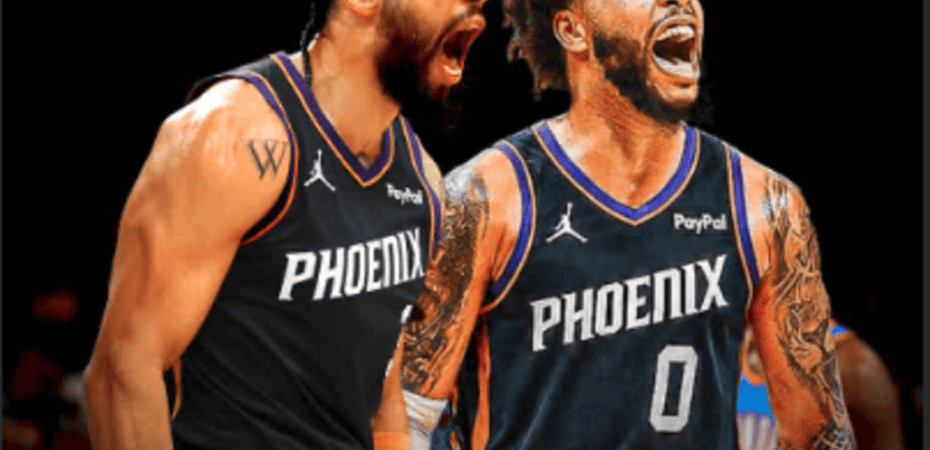
PHOENIX, ARIZONA- OCTOBER 28, 2026
The Phoenix Suns have spent years trying to build a roster capable of competing for an NBA championship, but assembling talented players is not the same thing as assembling a winning basketball team. A roster can have shot creators, scorers, veterans, and promising young players and still struggle to function as a unit. When the pieces do not fit together, the problems show up in inconsistent offense, defensive breakdowns, poor shot selection, and an inability to close out games. In the team’s first week of the regular season this description has been their identity.
The biggest question surrounding the Suns is not simply whether they have enough talent. It is whether that talent complements itself. A successful NBA team needs players who understand their roles, share the basketball, defend consistently, and provide the right balance between individual creation and team execution. The role of each guy in the Suns starting lineup doesn’t look like it’s defined. The Forward position played by Dillion Brooks, his role from previous teams was to be the defensive stopper but now he wants to score like a go-to guy. Miles Bridges is still feeling his way around to define his role, that puts the team’s forward position currently not functioning properly.
The point guard position may just have the wrong player in its slot, whether it’s Devin Booker or Jalen Green, neither of these players are pure point guards. Green is currently learning the position so that is a disadvantage and takes time to learns the offensive efficiency will suffer until he learns it. Booker on the other hand has more experience running the point, but he is better utilized as a scorer. So the roster is in all kinds of turmoil.
If Phoenix wants to build a sustainable contender, the solution may not be to add another superstar. It may be to establish a clearer identity, improve the roster’s balance, and make every player fit into a system designed to produce efficient basketball.
Too Much Individual Scoring, Not Enough Offensive Flow:
One potential issue with a roster built around multiple high-level scorers is that the offense can become overly dependent on individual shot creation. When several players are accustomed to having the ball in their hands, possessions can turn into isolation plays rather than coordinated actions involving the entire lineup.
That can create several problems. Teammates may stand around watching the primary scorer, off-ball movement can disappear, and possessions can become predictable when opponents know who is likely to take the shot. Even talented offensive players can become less effective when they are forced to take difficult shots late in the shot clock.
The Suns need to distinguish between having multiple players who can score and having an offense that consistently creates good shots.
The fix: Establish a more deliberate offensive structure built around screening, cutting, ball movement, and quick decisions. The team should create advantages through actions such as pick-and-rolls, dribble handoffs, and off-ball screens before relying on isolation basketball. Individual stars should retain the freedom to take over games, but isolation should be a weapon rather than the default offensive system. So with the roster as it’s currently constructed this is difficult to achieve without a traditional point guard first, and then guys with a mind set to accept their role. The Center Khaman Maluach is having a hard time filling this screen and roll role, because his hands are not as reliable and he is still in the stage of learning the game and how to play free without over thinking.
Phoenix should also evaluate its offense using assist percentage, turnover rate, effective field-goal percentage, and the frequency of possessions ending in difficult late-clock shots. Those measurements would help determine whether the problem is poor execution, inefficient shot selection, or simply a lack of consistent offensive creation. This list of solutions after looking at the plus and minus numbers would suggest a change in the starting lineup. The closest the Suns have to a point guard is Collin Gillespie, but his current role seems like the team wants him to be a shot maker first. He needs be a pass first by getting others in their spots, and running the pick and role with bigs and getting its best player the ball in his kill spots. He needs to be aware who the hot hand is and create ways to get everyone involved while being ready to knock down open shots himself.
A Roster Imbalance Between Offense and Defense:
Another potential problem is building a team around offensive talent without giving enough attention to defensive versatility. A player can be an excellent scorer and still create lineup difficulties if he struggles to defend opposing guards, navigate screens, or protect the rim. You can just fill in the names of these current problems on this roster, but which ever way you put it, this things won’t work until every individual figures out his exact role and excels in it.
These weaknesses can become more pronounced in the playoffs, when opponents repeatedly target the least effective defender in a lineup. One defensive liability can force teammates to help, opening up corner three-pointers, driving lanes, and offensive rebounds.
The Suns do not necessarily need every player to be an elite defender. They need enough reliable defenders to prevent one weakness from compromising the entire lineup.
The fix: Phoenix needs perimeter defenders who can handle difficult assignments, mobile forwards who can switch between positions, and a dependable interior presence who can deter drives without requiring constant help. This role as we said earlier should be Dillion Brooks role. Brooks needs to not be such a volume shooter in the offense, rather boxing out and rebounding and creating second chance opportunities. He should go back to the Memphis Grizzlies Brooks that defended the opposing team’s best players and wreak havoc on the defensive end. In other words just pretend that every opposing defender is Lebron James, that would keep him engaged.
The coaching staff should also examine opponent field-goal percentage at the rim, defensive rebounding percentage, opponent three-point attempts from the corners, and points allowed per 100 possessions. These statistics can help reveal whether the problem comes from individual matchups, poor rotations, or a lack of interior protection.
A balanced roster would allow the Suns’ best offensive players to focus on creating advantages without requiring them to compensate for every defensive weakness around them. These things take time, and it’s better early than late.

